 11
11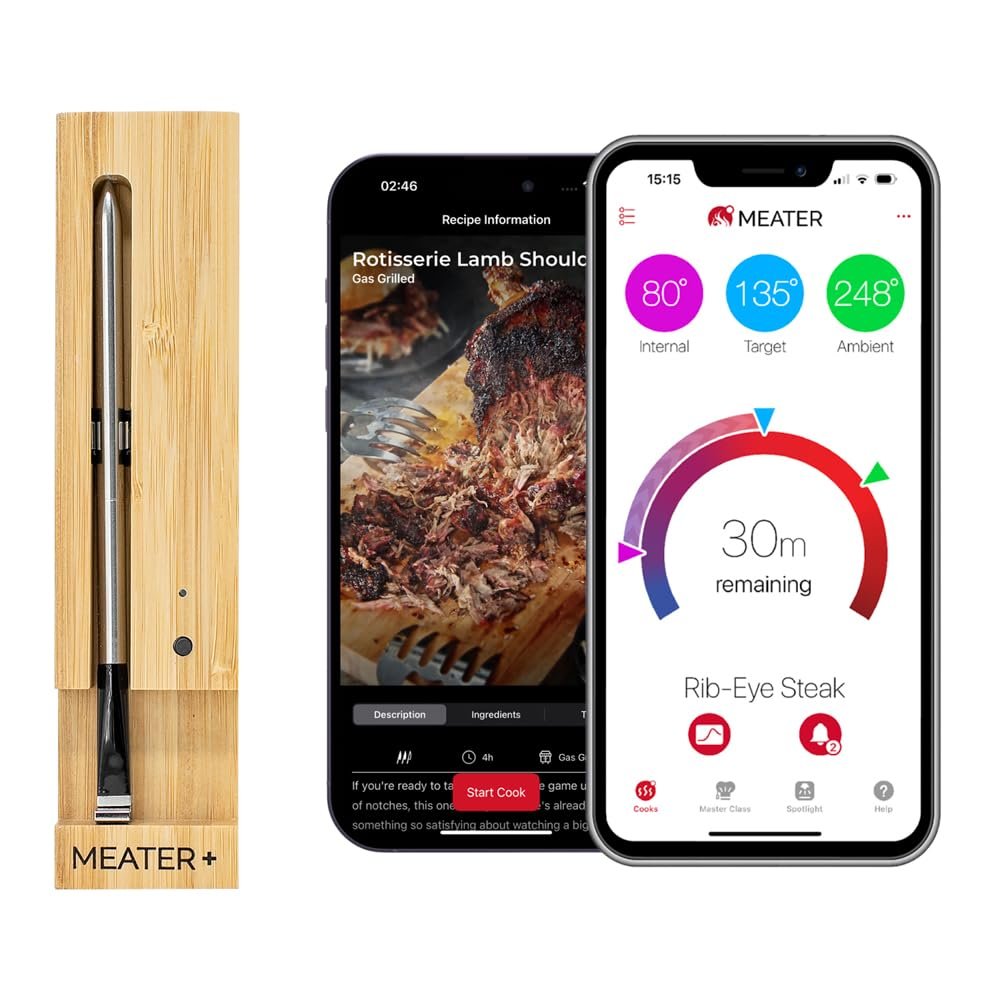
Cooking meat to the right temperature has always been part science, part guesswork. Poke it, cut into it, press it with a finger, hope for the best. Traditional instant-read thermometers helped solve part of that problem, but they still require opening the grill or oven repeatedly, which lets heat escape and interrupts the cooking process. Wireless smart thermometers like the MEATER Plus take a different approach, aiming to let people monitor internal temperature remotely without hovering over the cooking surface the entire time.
This article explores what the MEATER Plus offers, how it tends to be used in everyday cooking, and what’s worth thinking about before adding one to your kitchen or outdoor cooking setup. As with any smart kitchen device, it’s worth checking current specifications and app details directly, since software features in particular tend to evolve over time.
The MEATER Plus is a wireless, wire-free meat thermometer designed to track both internal meat temperature and ambient cooking temperature simultaneously. Unlike older wired probe thermometers that require running a cable out of the oven or grill (which can compromise the seal on some appliances), the MEATER Plus operates entirely without wires, using Bluetooth connectivity to relay temperature data to a smartphone app.
It’s built around a dual-sensor probe: one sensor measures the internal temperature of the meat itself, while a second sensor near the base of the probe tracks the ambient temperature of the cooking environment, whether that’s a smoker, oven, grill, or air fryer. This dual-sensor design is meant to give a fuller picture of the cooking process rather than just a single internal temperature reading.
The “Plus” model specifically extends Bluetooth range compared to the original MEATER, offering up to 165 feet of range when used with the companion smartphone app, which matters for people who want to step away from the grill without losing connection.
The probe’s design includes two separate temperature sensors. One tracks the internal temperature of the meat, which is the number most people care about most directly, while the other tracks the ambient temperature surrounding the food. This second data point can be useful for understanding how hot your grill, smoker, or oven actually is at probe level, which doesn’t always match the temperature displayed on the appliance itself.
Because the probe has no wires or cables, it can be used inside a fully closed oven, grill lid, or smoker without needing to run a cable out through a door seal. This is one of the more practical differences compared to older wired probe thermometers, which often required leaving an oven or grill door slightly open, something that can affect cooking temperature and efficiency.
The extended range compared to the standard MEATER model allows users to monitor cooking progress from a greater distance, whether that means checking on a turkey from another room or keeping an eye on temperature while doing yard work near a smoker. This extended range is achieved through a relay/repeater component that boosts the signal beyond a basic direct Bluetooth connection.
Temperature data streams to a companion app, which typically displays real-time internal and ambient temperature readings, along with an estimated time remaining until the target temperature is reached. Many apps in this category also include guided cooking programs for different types of meat, which can walk users through recommended temperatures and resting times for specific cuts.
Beyond just displaying raw temperature numbers, the app often includes built-in guides for common proteins like steak, chicken, turkey, and pork, offering suggested target temperatures and doneness levels. Some versions also include recipe content, which can be a helpful reference point for less experienced cooks trying to figure out appropriate temperatures for less familiar cuts of meat.
Based on the current internal temperature, the rate of temperature increase, and the target temperature, the app typically calculates an estimated cooking time remaining. This kind of prediction tends to become more accurate as cooking progresses, since it relies on real-time rate-of-change data rather than a fixed formula.
Because meat continues to cook somewhat after being removed from heat (a phenomenon often called carryover cooking), some smart thermometer systems, including this one, provide guidance or notifications about resting time, helping ensure meat doesn’t overcook while resting or get served before reaching a safe or desired internal temperature.
The probe typically comes with a charging case that also serves as a storage container, which extends the device’s battery life between uses and helps keep the probe protected when not in use.
For many people who grill, smoke, or roast meat regularly, a wireless probe thermometer like this tends to change the rhythm of cooking in a fairly noticeable way.
Grilling steaks and burgers. Rather than repeatedly cutting into a steak to check doneness (which releases juices and can dry out the meat), the probe allows continuous internal temperature monitoring, helping achieve consistent results across multiple cuts without needing to guess based on time alone.
Smoking large cuts of meat. Low-and-slow cooking methods like smoking brisket or pork shoulder often take many hours, and temperature can plateau or stall partway through the cook (a well-known phenomenon among barbecue enthusiasts). Having continuous temperature monitoring without needing to open the smoker repeatedly (which lets out heat and smoke) can help maintain more consistent results over long cook times.
Roasting whole poultry. Turkey and whole chickens are notoriously tricky to cook evenly, given the need to reach safe temperatures in the thickest parts of the meat without drying out thinner areas. A dual-sensor probe can help track both the meat’s internal progress and the oven’s actual temperature near the food.
Oven-roasted dishes. For roasts, poultry, and other oven-based dishes, being able to monitor temperature progress from another room means less time spent standing by the oven, and fewer instances of accidentally overcooking food because of losing track of time.
Air fryer cooking. Since air fryers cook relatively quickly and in a compact space, having a compatible wireless thermometer allows monitoring internal temperature without repeatedly opening the basket, which can otherwise interrupt the cooking cycle and airflow.
Reverse searing and multi-stage cooking methods. Techniques like reverse searing (cooking meat slowly first, then searing at high heat at the end) benefit from precise, continuous temperature tracking, since timing the transition between stages correctly is central to the method’s success.
People who grill or smoke food regularly. Those who spend significant time cooking outdoors, particularly with long cook times like smoking, tend to benefit most from wireless monitoring, since it reduces the need to stay physically close to the cooking equipment for extended periods.
Home cooks who want more consistent results with poultry and roasts. Turkey, chicken, and larger roasts are common sources of kitchen anxiety around undercooking or overcooking. A reliable temperature tracking system can reduce guesswork for people who cook these dishes for family gatherings or holidays.
Those new to grilling or smoking who want more guidance. App-based guided cooking programs can be particularly helpful for less experienced cooks who aren’t yet familiar with target temperatures for different meats and doneness levels.
People who like to multitask while cooking. Since the app allows remote monitoring, this type of thermometer suits people who want to prep side dishes, entertain guests, or handle other tasks while a main dish cooks, without needing to check on it constantly in person.
Data-oriented cooks who enjoy detail and precision. Some people simply enjoy having more visibility into their cooking process, and the ambient temperature tracking plus estimated time remaining can appeal to those who like understanding not just the outcome but the process behind it.
On the other hand, people who cook mostly quick, simple dishes that don’t require precise temperature monitoring, or those who prefer not to rely on smartphone apps as part of their cooking process, may find a basic instant-read thermometer sufficiently practical without the added technology.
Reliance on Bluetooth connectivity and an app. Since the core functionality depends on a smartphone app and Bluetooth connection, occasional connectivity issues (as with most Bluetooth devices) can happen, and the experience is generally less “plug and play” than a simple analog dial thermometer.
Battery life and charging habits. The probe itself has limited battery life per use and needs to be recharged in its case between cooks. Forgetting to charge it after a previous use could mean it’s not ready when needed for a new cooking session.
Probe placement matters for accuracy. Like most meat thermometers, getting an accurate reading depends on inserting the probe correctly into the thickest part of the meat, avoiding bone or excessive fat, which can throw off readings. This isn’t unique to this device, but it’s worth understanding that accuracy is still partly dependent on proper technique.
Range limitations in certain environments. While the Plus model offers extended range compared to the base MEATER model, factors like walls, metal structures (such as grill hoods), and interference from other wireless devices can still affect real-world range compared to open-air conditions.
Cleaning and maintenance requirements. Because the probe contains internal electronics, it typically isn’t fully submersible and requires specific cleaning instructions rather than simply being tossed in a dishwasher, which is worth knowing ahead of time for care and longevity.
Cost relative to basic thermometers. Smart, app-connected thermometers generally cost more than basic instant-read or simple wired thermometers, so it’s worth weighing how much value the added connectivity, ambient sensing, and app guidance provides for your specific cooking habits.
Basic instant-read thermometers are simple, inexpensive, and require no app or charging, but only provide a single-point-in-time reading rather than continuous monitoring, meaning the oven, grill, or smoker needs to be opened each time a reading is needed.
Wired probe thermometers allow continuous internal temperature monitoring by running a cable from the probe to an external display, often clipped to the appliance exterior. These tend to be less expensive than wireless smart thermometers but require managing a physical cable, which can be inconvenient for closed ovens or smokers with tight door seals.
Wireless smart thermometers, like the MEATER Plus, aim to combine the continuous monitoring benefits of wired probes with the convenience of no cables, plus additional features like ambient temperature tracking, app-based guidance, and remote monitoring from a distance. These tend to come at a higher price point but offer more flexibility and monitoring convenience, particularly for people who want to step away from the cooking area during long cooks.
Built-in oven or grill thermometers (when available on higher-end appliances) offer some of the same continuous monitoring benefits without needing a separate device, but these are limited to whatever equipment they’re built into and aren’t portable across different cooking setups the way a standalone smart thermometer can be.
Does the MEATER Plus work in a closed oven or grill? Yes, since the probe is fully wireless, it’s specifically designed to work inside fully closed ovens, grills, and smokers without needing a cable to pass through a door seal, up to the manufacturer’s stated maximum ambient temperature limits.
How accurate is the ambient temperature reading compared to the appliance’s built-in thermometer? Ambient readings from the probe reflect the temperature right at probe level, which can sometimes differ from a grill or oven’s built-in thermometer, particularly in appliances with uneven heat distribution. This is often seen as a helpful cross-check rather than a replacement for the appliance’s own temperature display.
Can this thermometer be left in the meat the entire time it cooks? Yes, that’s generally the intended use, allowing continuous monitoring throughout the cooking process rather than needing to insert and remove a probe repeatedly.
Is an internet connection required, or just Bluetooth? The core functionality typically relies on Bluetooth connectivity between the probe and a smartphone, rather than requiring a full internet connection, though some app features may benefit from connectivity for updates or additional content.
Does the probe work for foods other than meat? While primarily marketed for meat, some users also use similar probes for other foods requiring internal temperature monitoring, though it’s generally designed and calibrated with meat cooking in mind.
How is the probe cleaned after use? Manufacturer guidelines typically recommend specific cleaning methods given the internal electronics, often involving wiping down rather than submerging or placing in a dishwasher. It’s worth reviewing care instructions directly to avoid damaging the internal components.
The MEATER Plus represents a fairly significant shift in how home cooks can approach meat temperature monitoring, moving away from repeated manual checks and toward continuous, wireless tracking paired with smartphone app guidance. Its dual-sensor design, extended Bluetooth range, and app-based cooking programs are aimed at reducing guesswork for tasks like grilling steaks, smoking large cuts, or roasting a holiday turkey.
That said, it’s not necessarily essential for every type of cooking. Quick, simple dishes that don’t require precise temperature monitoring may not benefit much from this added layer of technology, and some cooks may simply prefer the straightforwardness of a basic instant-read thermometer. For those who cook meat regularly, particularly through long, temperature-sensitive methods like smoking or roasting, this type of wireless smart thermometer can offer a meaningful improvement in convenience and consistency.
As always, it’s worth checking current app features, compatibility with your devices, and specific care instructions directly, since details in this category can change over time as software and hardware are updated.