 11
11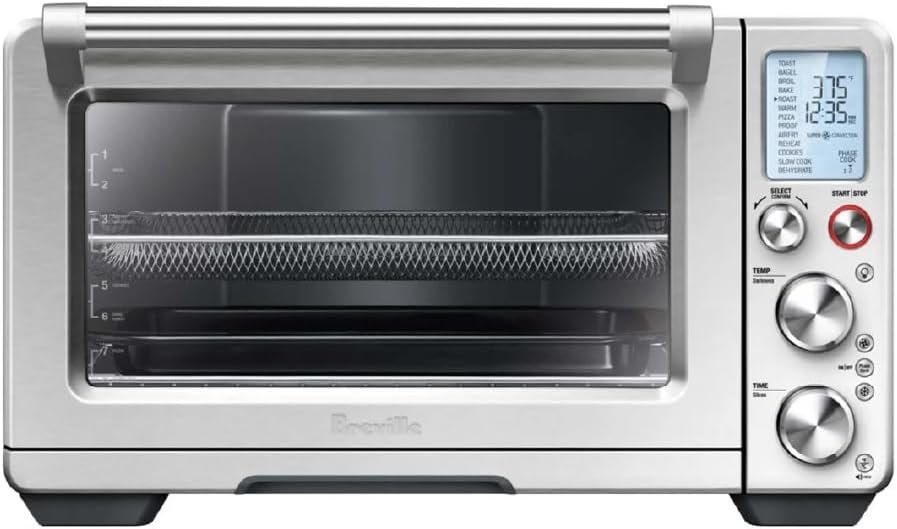
Kitchen counters have a way of becoming crowded with single-purpose gadgets—a toaster here, an air fryer there, maybe a small convection oven wedged in the corner for weekend baking. The appeal of a multi-function countertop oven is that it consolidates several of these tools into one appliance, provided it can actually handle the range of tasks it promises. The Breville BOV900BSS Smart Oven Air Fryer Pro falls into this category, offering 13 distinct cooking functions in a single stainless steel unit.
This article takes a practical look at what the appliance offers, how it tends to fit into everyday cooking routines, and what’s worth thinking through before deciding whether it belongs on your counter. As with any appliance research, it’s worth pairing this kind of overview with current product listings and specifications rather than relying on any single source.
The Smart Oven Air Fryer Pro is a countertop convection oven built to handle a wide range of cooking methods beyond simple toasting or reheating. Rather than being marketed as just an air fryer or just a toaster oven, it’s positioned as a genuine oven replacement for smaller-scale cooking, capable of roasting, baking, broiling, dehydrating, proofing dough, and air frying, among other functions.
Housed in brushed stainless steel, the unit is sized to sit on a counter but is large enough internally to accommodate a 13-inch pizza or a 9-by-13-inch baking dish, depending on the exact configuration. It uses an element IQ system, which is Breville’s approach to managing multiple heating elements independently so that heat is directed where it’s needed for a given function rather than applying uniform heat regardless of the task.
One of the more technically interesting aspects of this oven is its approach to heat distribution. Instead of using a single heating pattern for every function, the system adjusts which of its heating elements are active and how intensely, depending on whether you’re baking, broiling, or air frying. In theory, this means a delicate task like proofing bread dough uses gentler, more even heat, while broiling engages elements designed to deliver stronger top-down heat for browning.
The appliance includes a range of built-in settings for different cooking styles: toast, bagel, bake, roast, broil, pizza, cookies, reheat, warm, proof, slow cook, dehydrate, and air fry. Each preset is designed to adjust temperature, fan speed, and timing automatically based on the selected function, which can reduce some of the guesswork involved in figuring out appropriate settings for less common tasks like dehydrating fruit or proofing dough.
Convection cooking works by circulating hot air throughout the oven cavity, which tends to cook food more evenly and often more quickly than static heat alone. This model’s convection setting is designed to reduce cooking time compared to conventional (non-convection) methods, which can be a meaningful factor for people cooking on a tighter weeknight schedule. It’s worth noting that actual time savings can vary depending on the specific dish, quantity of food, and desired level of doneness.
Air frying has become one of the more popular cooking methods in recent years, largely because it can produce a crisp, fried-like texture using significantly less oil than traditional deep frying. Rather than requiring a dedicated air fryer, this oven includes an air fry setting that uses its convection fan and adjusted heat settings to achieve similar results, along with an included air fryer basket accessory designed for this purpose.
A well-lit interior can make a bigger practical difference than it might seem. Being able to check on food without opening the door (which lets heat escape and can affect cooking results) is a small convenience that adds up over frequent use, especially for tasks like watching cookies brown or monitoring a roast.
Rather than relying purely on physical dials for every setting, the oven includes a digital display paired with a control dial, allowing users to select functions and fine-tune settings like temperature, time, and doneness level with a bit more precision than older analog-style toaster ovens typically offer.
The unit typically comes with several accessories suited to its different functions, which may include a wire rack, baking pan, air fry basket, and pizza pan, though exact accessory bundles can vary by retailer and time of purchase, so checking current listings is worthwhile.
For many households, a multi-function countertop oven like this ends up handling a broader range of tasks than either a traditional toaster oven or a standalone air fryer would on its own.
On a typical weekday, it might be used to toast bread or bagels in the morning, then reheat leftovers for lunch without needing to turn on a full-size oven for a small portion of food. In the evening, the roast or bake settings can handle things like a small roasted chicken, a tray of vegetables, or a casserole, particularly useful in households where heating up a large wall oven for a modest meal feels inefficient.
The air fry setting tends to get regular use for foods like frozen appetizers, homemade fries, chicken wings, or reheated fried foods that benefit from regaining some crispness. Because the basket accessory allows for airflow underneath and around food, results are generally closer to deep-fried texture than what a standard bake setting alone would produce.
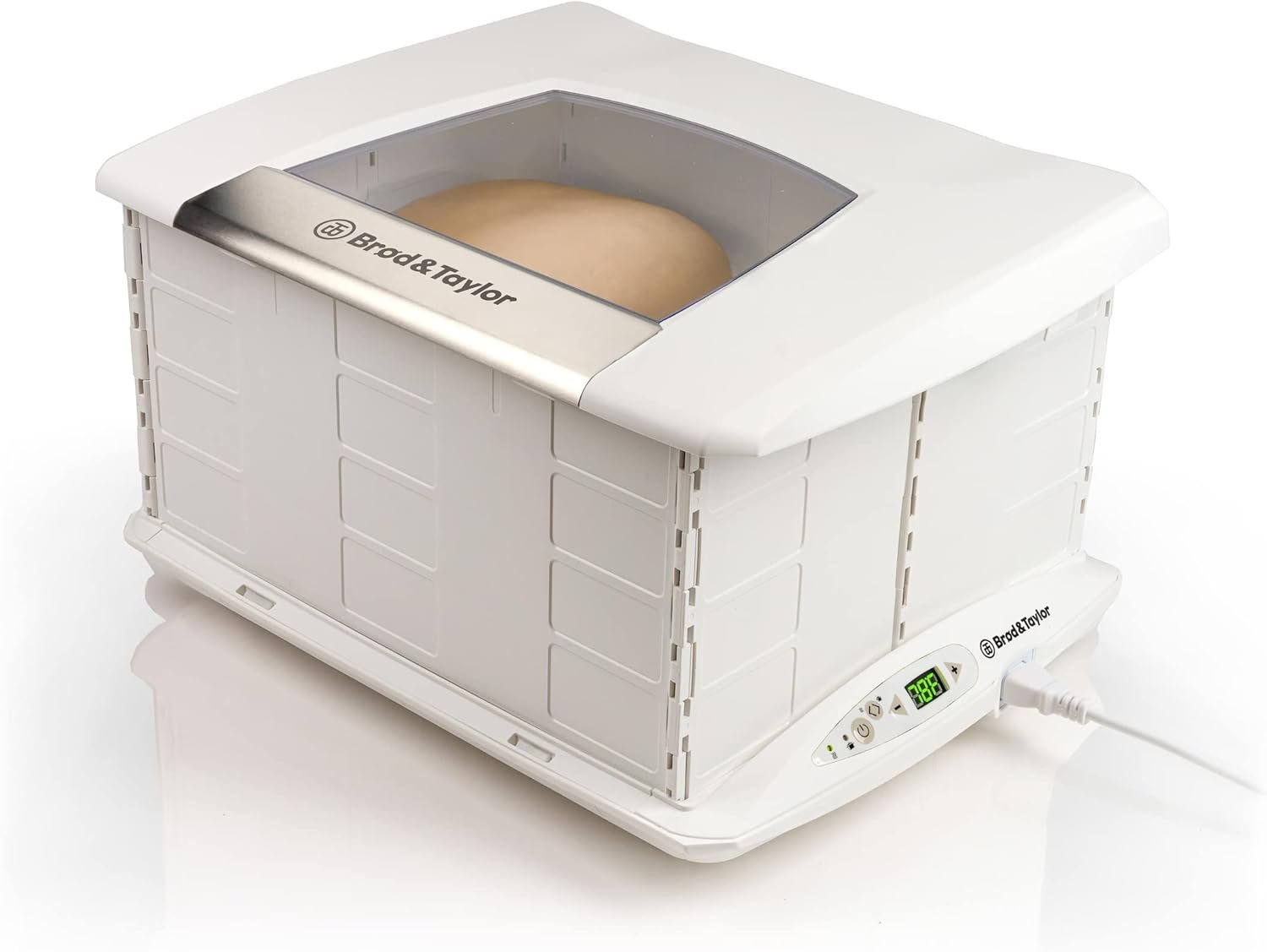
Less commonly used but still valuable functions include the dehydrate setting, useful for making dried fruit, jerky, or herbs, and the proof setting, which maintains a warm, controlled environment ideal for helping bread dough rise, a task that can be tricky in colder kitchens without a dedicated proofing box.
For households that bake regularly, the combination of convection heat and a viewing window tends to make tasks like cookies, small cakes, and pizzas more consistent, since even heat distribution helps avoid the uneven browning that can happen in ovens with hot spots.
People looking to consolidate multiple countertop appliances. For those juggling a separate toaster, air fryer, and small convection oven, a combined unit like this can free up counter space and reduce the number of appliances that need cleaning, storing, and maintaining.
Smaller households cooking modest portions. Heating a full-size wall oven for a single portion of roasted vegetables or a small tray of cookies is often inefficient in terms of both time and energy. A countertop oven sized for smaller batches can be a more practical daily-use option, reserving the main oven for larger meals or entertaining.
People interested in air frying without dedicating counter space to a single-purpose appliance. Since the air fry function is built into a broader multi-purpose oven, this suits people who want the benefits of air frying without committing counter real estate to an appliance that only does one thing.
Bakers who want more consistent results than a basic toaster oven provides. The combination of convection heat and multiple precise presets can appeal to home bakers looking for more control and consistency than older, simpler toaster ovens typically offer.
Renters or those in smaller kitchens. For people in apartments or homes with limited kitchen space, a versatile countertop oven can sometimes reduce reliance on a full-size oven altogether for everyday cooking needs.
On the other hand, households that primarily cook large quantities of food, host frequent large gatherings, or need to cook multiple large dishes simultaneously may find the capacity of a countertop unit limiting compared to a full-size oven, and might view this as a supplement rather than a replacement.
Counter space and clearance requirements. Multi-function countertop ovens in this category tend to be larger than basic toaster ovens, both in footprint and height, particularly when accounting for ventilation clearance around the back and sides. It’s worth measuring available counter space, including clearance for upper cabinets, before purchasing.
Preheating and cooking times vary by function. While convection settings are generally designed to speed up cooking compared to conventional heat, not every function benefits equally, and some tasks like slow cooking are intentionally designed to take longer. Expectations should be set function by function rather than assuming uniformly fast results across the board.
Learning curve for less common functions. Features like dehydrating or proofing dough may be new territory for users coming from a basic toaster oven, and getting a feel for optimal settings, particularly for dehydrating (which can take many hours depending on the food) may take some trial and error.
Accessory care and cleaning. Depending on how frequently the appliance is used, especially for air frying or roasting fattier foods, the interior, trays, and basket accessory will need regular cleaning to prevent smoke or residue buildup over time.
Capacity limitations compared to full-size ovens. While designed to handle a reasonably wide range of dishes, including a 13-inch pizza, the interior cavity is still smaller than a standard wall oven, which matters for people planning to cook large batches or multiple trays simultaneously.
Energy use during long functions. Functions like slow cooking or dehydrating run for extended periods, and while countertop appliances often use less energy than heating an entire wall oven, it’s still worth being mindful of run times for functions used regularly over many hours.
Countertop cooking appliances broadly fall into a few categories, each suited to different needs.
Basic toaster ovens are typically simpler and more affordable, focused mainly on toasting, basic baking, and reheating. They usually lack advanced functions like air frying, dehydrating, or proofing, and tend to use less sophisticated heat distribution systems, which can result in less even cooking.
Standalone air fryers are built specifically around the air frying function, often with a more compact, basket-style design rather than a traditional oven cavity. These can be excellent at their specific task but generally don’t offer the broader range of functions like baking a full tray of cookies or roasting a whole chicken that a multi-function oven provides.
Multi-function countertop ovens like this Breville model aim to bridge the gap between basic toaster ovens and full-size kitchen ovens, offering a wider range of presets and cooking methods in one unit. This tends to suit people who want versatility without the cost, size, or energy use of a full-size oven, though it typically comes at a higher price point than either basic toaster ovens or standalone air fryers.
Full-size wall or range ovens remain the standard for large-batch cooking, multiple simultaneous dishes, and big holiday meals. Countertop multi-function ovens generally aren’t intended to fully replace them but rather to handle smaller, everyday cooking tasks more efficiently.
Can this oven fully replace a standard kitchen oven? For smaller households or those cooking modest portions regularly, it may reduce reliance on a full-size oven significantly. However, for large meals, multiple simultaneous dishes, or big roasting projects, a full-size oven still tends to offer more capacity and flexibility.
How does the air fry function compare to a dedicated air fryer? Because this oven uses its convection fan combined with an air fry preset and basket accessory, results are generally comparable to standalone air fryers, though the exact texture and cooking time can vary by food type and quantity. Some users find slight adjustments to time or temperature helpful when transitioning from a dedicated air fryer’s settings.
Does the convection setting work for every function? Convection is typically most beneficial for functions like baking, roasting, and air frying, where even heat and airflow improve texture and consistency. Functions like slow cook or warm are usually designed to operate differently, since consistent low heat rather than rapid air circulation is the goal.
How much maintenance does this type of oven typically require? Regular cleaning of the interior, trays, and accessories is recommended, particularly after air frying or roasting fattier foods, to prevent smoke or lingering odors during future use. Manufacturer guidelines usually provide specific care instructions for different components.
Is the dehydrate function comparable to a dedicated food dehydrator? It can produce similar results for smaller batches, though dedicated multi-tray dehydrators are generally better suited for large-volume dehydrating projects. For occasional or smaller-batch dehydrating, an integrated function like this is often a convenient alternative to buying a separate appliance.
What size dishes can this oven typically accommodate? Capacity varies, but many models in this category are designed to fit items like a 13-inch pizza or a standard 9-by-13-inch baking dish. It’s worth checking specific interior dimensions against your typical bakeware before purchasing.
The Breville BOV900BSS Smart Oven Air Fryer Pro represents a broader shift in kitchen appliances toward consolidation—fitting toasting, baking, roasting, air frying, dehydrating, and proofing into a single countertop unit rather than requiring several separate gadgets. Its element IQ heating system and range of presets are designed to bring some of the precision and versatility of a full kitchen oven down to a more compact, everyday-use scale.
That versatility does come with trade-offs worth considering, including counter space requirements, a learning curve for less familiar functions, and capacity limitations compared to a full-size oven for larger cooking projects. For households looking to streamline their countertop appliances, reduce reliance on a full oven for smaller meals, or explore air frying and other functions without dedicating space to multiple single-purpose devices, this type of multi-function oven tends to offer a practical middle ground.
As always, it’s worth reviewing current product specifications, interior dimensions, and included accessories directly, since details can shift over time and vary slightly between retailers.