 11
11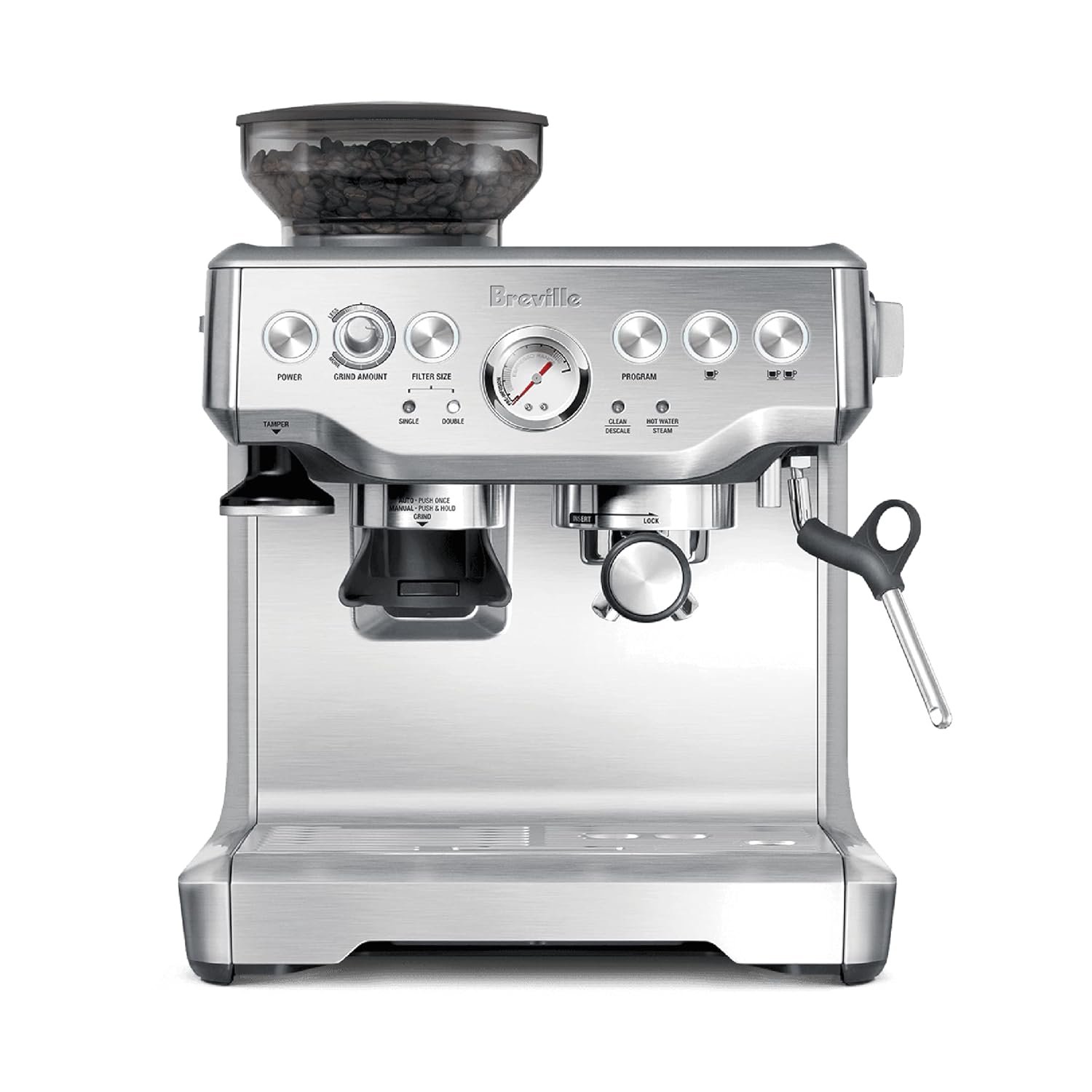
There’s a particular kind of morning ritual that coffee lovers understand intuitively—the grind, the tamp, the hiss of steam, the slow pull of a shot into a waiting cup. For years, that ritual belonged mostly to café baristas and serious hobbyists willing to juggle three or four separate machines. The Breville BES870XL Barista Express changed that equation for a lot of households by folding grinder, espresso machine, and steam wand into a single stainless steel unit.
This article walks through what the machine actually does, how people tend to use it day to day, who might find it a good fit, and what’s worth thinking about before bringing one into a kitchen. Nothing here is meant as a glowing endorsement or a substitute for reading current listings and specifications—just a grounded look at a fairly well-known appliance in the home espresso category.
At its core, the BES870XL is an all-in-one espresso system. Instead of buying a separate burr grinder, then a portafilter machine, then figuring out milk frothing on your own, the unit combines those three functions into one footprint on the counter. The idea behind this design is straightforward: freshly ground coffee tends to produce better-tasting espresso than pre-ground coffee that’s been sitting in a bag, and having the grinder built directly into the machine removes a step (and a purchase) from the process.
The housing is brushed stainless steel, which is common in this price bracket because it tends to hold up reasonably well to daily kitchen use and matches easily with other stainless appliances. It’s a mid-size machine—not compact, but not the kind of large-format equipment you’d expect to see in a commercial setting either.
One of the more distinctive elements of this machine is the built-in grinder. Instead of grinding beans separately and transferring them to a portafilter by hand, users can grind directly into the portafilter basket. The grinder offers multiple grind-size settings, which matters because espresso requires a much finer grind than drip coffee or a French press. Getting that grind size right is one of the more technical parts of making espresso, and having an integrated dial removes some of the guesswork—though it doesn’t eliminate the learning curve entirely.
The machine includes a dosing feature that lets users control how much coffee gets ground for each shot. This ties into a concept espresso enthusiasts talk about often: consistency. Small variations in dose, grind size, or tamping pressure can noticeably change how a shot tastes, so having a way to standardize the amount of coffee going into the basket is a practical convenience rather than a gimmick.
Espresso machines are often described by their bar pressure, which refers to the force used to push water through tightly packed coffee grounds. The BES870XL uses a 15-bar Italian pump, though it’s worth noting that most well-designed espresso machines actually regulate pressure down to around 9 bars during extraction, since that’s generally considered the ideal range for pulling a balanced shot. The higher-rated pump provides headroom rather than meaning shots are pulled at 15 bars themselves.
The steam wand is fully manual, meaning the person operating the machine controls the angle, depth, and timing of milk frothing rather than relying on an automated frothing arm. This is a bit of a double-edged feature. On one hand, manual steaming allows for more nuanced control over microfoam texture, which matters for people who want to pour latte art or fine-tune the mouthfeel of a cappuccino. On the other hand, it requires practice. Unlike fully automatic machines that handle frothing without much input, this one expects the user to develop a feel for it over time.
Water temperature stability is a common pain point in home espresso machines, since even small fluctuations can lead to shots that taste sour (under-extracted) or bitter (over-extracted). The Barista Express uses a digital temperature control system designed to keep water temperature consistent throughout the extraction process, which is one of the more genuinely useful engineering choices in this machine given how much temperature affects flavor.
The portafilter—the handle-and-basket assembly that holds the coffee grounds—is a commercial-style 54mm size, which is on the smaller end of commercial portafilters but still larger than the compressed baskets found in many entry-level machines. It usually comes with different basket sizes for single and double shots, along with a pressurized basket option that can help mask minor grinding or tamping inconsistencies for those still building their technique.
The water reservoir is designed to be removable for easy refilling and cleaning, which sounds like a small thing until you’re the person who has to lug a machine to the sink every time it runs low.
For most owners, the workflow generally follows a similar pattern each morning. Whole beans go into the built-in hopper, the grind size and dose are set based on preference (and adjusted over time as beans and roast levels change), and the machine grinds directly into the portafilter. From there, tamping is done manually using an included tamper, the portafilter locks into the group head, and the shot pulls in roughly 25-30 seconds for a standard double shot.
If milk drinks are part of the routine, the steam wand comes into play next. Steaming milk for a latte or cappuccino is arguably the part of the process with the steepest learning curve, since achieving smooth, glossy microfoam (rather than large bubbles or flat milk) takes some repetition. Many users find that the first few weeks involve some trial and error before results start feeling more predictable.
Because the grinder is integrated, some people also use the machine to grind beans for other purposes, such as a smaller batch for a French press, though the grind range is generally calibrated toward espresso rather than coarser brewing methods.
Cleaning is a regular part of ownership as well. The portafilter, baskets, and drip tray need routine rinsing, and periodic backflushing (running water through the group head with a blind filter) helps clear out coffee oils that build up over time. The machine also benefits from occasional descaling, particularly in areas with hard water, to keep the internal components running smoothly.
This kind of combined grinder-and-espresso-machine setup tends to appeal to a fairly specific type of coffee drinker.
People transitioning from café habits to home brewing. For someone who’s used to getting espresso drinks out several times a week and wants to shift that habit home, a machine like this offers a middle ground between convenience and control—more involved than a pod machine, but far less than commercial-grade equipment.
Hobbyists who enjoy the process, not just the result. Espresso preparation with a manual machine like this one is hands-on. Grinding, dosing, tamping, and steaming all require some attention and technique. People who enjoy tinkering and improving their process over time tend to get more satisfaction out of a machine like this than someone looking for a single-button solution.
Households that drink a variety of espresso-based beverages. Because the machine handles both espresso extraction and milk steaming, it suits people who rotate between lattes, cappuccinos, macchiatos, and straight shots rather than sticking to one drink type.
People who want fresh-ground coffee without buying separate equipment. For those specifically drawn to the flavor benefits of grinding beans immediately before brewing, an integrated grinder saves both counter space and the cost of a standalone burr grinder.
On the other hand, people looking for a fully automatic, one-touch experience, or those who don’t want to spend time learning grind adjustment and milk steaming, may find a superautomatic espresso machine or a pod-based system better suited to their habits.
The learning curve is real. Even with helpful features like dose control and digital temperature stability, pulling a well-balanced shot and steaming good microfoam takes practice. This isn’t a machine where the first shot is guaranteed to taste like something from a café.
Maintenance is ongoing, not occasional. Between daily cleaning of the portafilter and drip tray, periodic backflushing, and regular descaling, machines in this category require more upkeep than a drip coffee maker or single-serve pod system. Skipping maintenance tends to affect both taste and long-term performance.
Counter space and clearance matter. Combined grinder-and-espresso units tend to be taller and bulkier than either component alone, and some kitchens with lower upper cabinets may find clearance an issue when refilling the bean hopper or water tank.
Bean quality affects results significantly. Because the machine grinds fresh, the flavor outcome is closely tied to the quality and freshness of the beans used. Stale or poor-quality beans will still produce lackluster espresso even with well-calibrated equipment.
Grind size adjustment can take getting used to. Dialing in the right grind setting for a particular bean or roast level is part science, part trial and error, and preferences may shift depending on humidity, bean origin, and roast freshness.
Noise levels during grinding. Integrated grinders in this category are generally louder than standalone drip machines, which is worth factoring in for early risers in households with shared walls or sleeping family members.
It can help to think about home coffee equipment in a few broad categories rather than comparing specific brands or models.
Pod-based single-serve machines prioritize speed and simplicity. They typically produce a consistent (if somewhat limited) result with minimal effort, but they don’t offer the same depth of control over grind size, dose, or shot pressure, and the coffee itself is often less fresh since it’s pre-ground and sealed in advance.
Superautomatic espresso machines automate most or all of the process, including grinding, tamping, extraction, and sometimes milk frothing, at the press of a button. These tend to involve less hands-on technique but often come at a higher cost and with less user control over variables like grind size or shot volume.
Manual lever espresso machines sit at the opposite end of the spectrum, requiring the user to manually control water pressure using a lever mechanism. These offer maximum control but also the steepest learning curve and typically don’t include an integrated grinder at all.
Semi-automatic machines with built-in grinders, the category this Breville model falls into, generally aim for a middle path: enough automation to simplify daily use, but enough manual control (grind size, dose, tamping, steaming) to let users refine their technique and taste preferences over time. This category tends to suit people who want a genuine hobbyist experience without moving into fully manual, high-maintenance equipment.
Does the built-in grinder work for coffee methods other than espresso? The grinder is generally calibrated for the fine grind espresso requires, though many models in this category offer some range for slightly coarser grinds. It’s not typically marketed as a substitute for a dedicated grinder built for drip or French press brewing, which usually need a coarser, more adjustable range.
How long does it typically take to get comfortable using a machine like this? This varies by person, but many new users report needing a few weeks of regular use to get comfortable with grind adjustment, tamping pressure, and milk steaming. Online communities and manufacturer guides are often helpful resources during this learning period.
Is descaling necessary even with filtered water? Yes, though the frequency may be reduced. Mineral buildup happens over time regardless of water filtration, and periodic descaling helps maintain consistent heating and water flow.
Can this replace a separate milk frother? The steam wand is designed to texture milk directly, so a separate frother generally isn’t necessary for espresso-based drinks. However, some people who also enjoy other frothed beverages might still keep a small handheld frother for convenience.
Does the pressurized basket mean I don’t need to learn proper tamping technique? Pressurized baskets can help produce a decent shot with less precise tamping, which is useful while learning. Many home baristas eventually switch to non-pressurized baskets as their technique develops, since these tend to offer more nuanced control over extraction.
What kind of maintenance schedule should I expect? Daily rinsing of the portafilter and drip tray, weekly or biweekly backflushing depending on use frequency, and descaling every one to three months depending on water hardness are common practices, though specific schedules can vary by household water quality and usage volume.
The Breville BES870XL Barista Express represents a particular philosophy in home coffee equipment: combine the core tools needed for espresso making into one unit, automate the more tedious parts (like temperature regulation and dosing), but leave the more nuanced, skill-building parts (grinding calibration, tamping, milk steaming) in the user’s hands. That balance tends to appeal to people who see coffee-making as a small daily craft rather than a chore to rush through.
It’s not necessarily the simplest path to a cup of espresso, and it does ask for a bit of patience during the early learning period. But for people who enjoy the process as much as the result, and who are willing to put in some practice time, machines in this category tend to offer a meaningful step up from pod systems while avoiding the steeper cost and complexity of fully manual or superautomatic equipment.
As with any kitchen appliance investment, it’s worth reading current specifications, checking dimensions against your available counter space, and considering how much hands-on involvement you actually want in your daily coffee routine before deciding if this type of machine fits your habits.